

Why Smart Founders Build Great Products and Still Miss Revenue Targets
The gap between product quality and commercial execution is where most small businesses quietly stall.

I keep thinking about a company I watched up close a few years ago.
Great product. Clean UX. Sharp team. Customers were happy. Word of mouth was good — people were actually referring friends, which, if you’ve ever waited for that to happen, you know how rare it feels.
Month 22. They ran out of money.
Not because the product didn’t work. Because there was never any real revenue.
I’ve seen this more times than I’d like to admit. Brilliant founders, beautiful products, and a spreadsheet full of “almost” deals that never closed.
Here’s the uncomfortable truth: building a great product and building a real business are two completely different skills. Most founders are trained in one and assume it covers both.
It doesn’t.
The PMF Trap Nobody Talks About
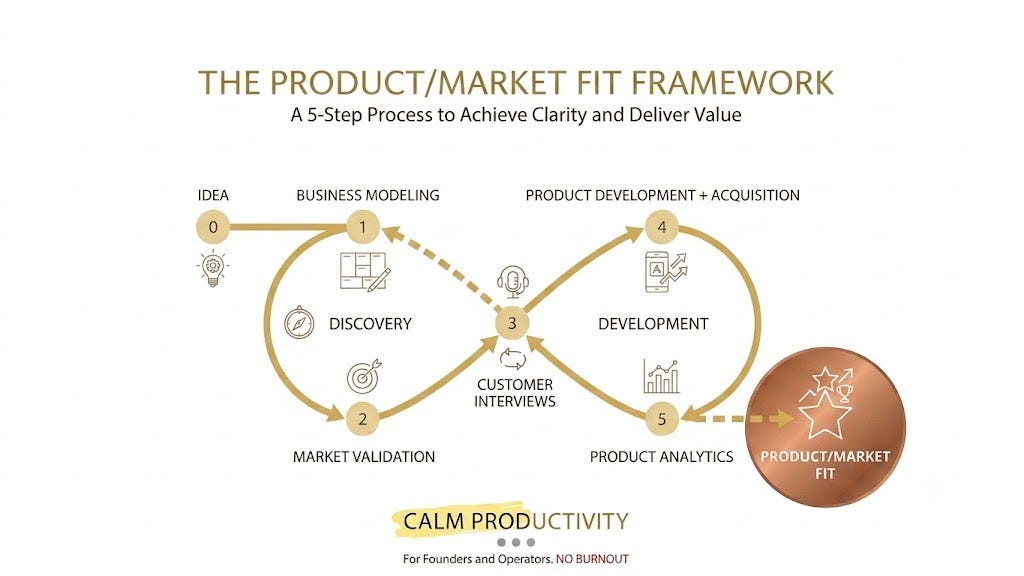
You talk to early users. They love it. You sign a few reference customers. Things feel like they’re moving.
You convince yourself you’ve found product-market fit — what Marc Andreessen described as the feeling that “the market is pulling the product out of you.”
But there’s a quieter version of this that doesn’t get enough airtime: fake PMF. This is when your product genuinely solves a real problem but for a group that’s too small, too price-sensitive, or too hard to reach at scale to build a real business on.
The attraction is real. The opportunity isn’t.
Lenny Rachitsky’s research on how companies actually find product-market fit is worth your time. His core finding: most founders had to manufacture PMF through relentless iteration on both the product and the go-to-market process. They didn’t discover it. They built it.
The product alone was never enough. Lenny's Newsletter

You Don’t Have a Product Problem. You Have an ICP Problem.
Most revenue shortfalls aren’t pricing problems. They’re not marketing problems. They’re Ideal Customer Profile problems.
There’s a framework from the venture world that I find genuinely useful even for smaller businesses.
Christoph Janz at Point Nine Capital described it this way: you need to understand whether you’re hunting elephants, deer, rabbits, or mice. Each one requires a completely different sales approach, a different kind of content, and a different way of spending your time.
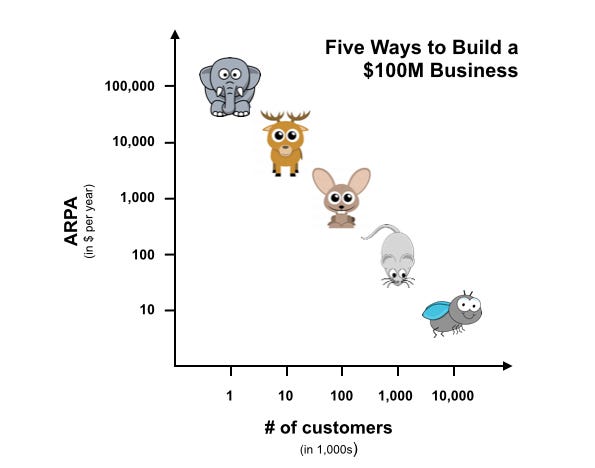
Most founders skip this entirely. Their ICP reads something like: “SMBs in the US that need productivity tools.” That’s not an ICP. That’s a demographic.
A real ICP has:
A specific trigger event — the “why now” for this exact customer
A quantifiable pain point with a dollar value attached
The person who actually makes the buying decision — not just the person you talk to
A competitor or workaround they’re actively trying to leave
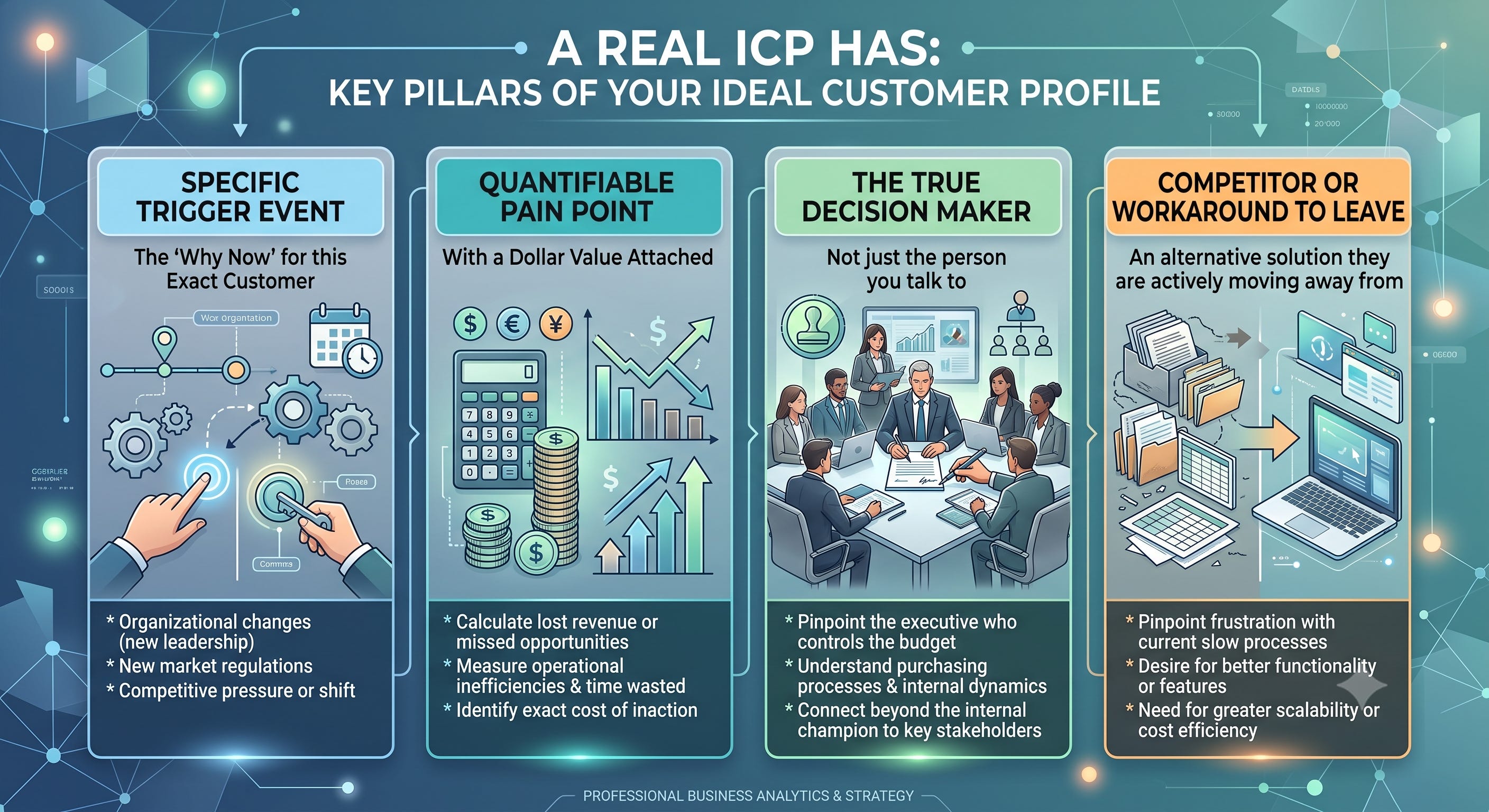
Without this, you’re pitching in the wrong room. Your content is pulling in the wrong reader. Your conversations are solving the wrong problem.
The product could be perfect. If you’re selling it to the wrong person, none of it matters.
The Sales Reality Founders Don’t Want to Hear
“Our product sells itself.” I’ve heard this from some very smart people. It has never been true.
Gartner research shows buyers complete well over half of their decision-making process before they ever speak to a salesperson. That means your content, your community, and your word-of-mouth are already part of your sales process, whether you designed them that way or not.
If you didn’t design it, it’s quietly working against you.
The most common mistake I see is founders treating sales as a closing function. Build the product, run the demo; they either buy or they don’t.
That’s not sales. That’s order-taking.
A few years ago, I brought a founder I was advising into meetings with some of my CXO relationships, the kind of doors that take years to open.
He was talented, passionate, and completely believed in what he’d built. That kind of conviction is usually an asset. In his case, it became a wall. Every time someone in those rooms raised a concern, asked for a change, or pushed back on whether the product fit their business's actual needs, he pushed back harder.
More than once, it turned into an open argument. Those relationships I’d spent years building were gone. Eventually, the board made the call. He was replaced as CEO.
The product didn’t fail him. His inability to hear the market through the people sitting across the table did.
He wasn’t a bad founder. He just hadn’t learned to separate his product from himself.
Real sales are a discovery process. It starts with understanding who actually makes the decision, what’s genuinely costing them money or sleep right now, and what they need to feel confident enough to say yes before you ever show them what you’ve built.
The founders who hit revenue targets consistently aren’t the best pitchers. They’re the best listeners.
Content Isn’t Marketing. It’s Commercial Infrastructure.
This is where I see the widest gap between founders who hit plan and founders who don’t.
One group treats content as a brand play, something you do on LinkedIn when you have spare time to look like a thought leader.
The other group treats content as a demand engine, a deliberate process that moves specific people from unaware to interested to ready to buy.
The output can look identical.
A newsletter.
A LinkedIn post.
A podcast.
The intention is completely different.
David Perell said it well: an audience you can’t convert is a hobby, not a pipeline.
A content strategy that actually works for a founder-led business answers three questions clearly:
Who exactly is this for? Not “anyone interested in productivity.” The one specific person.
What should they believe after reading it that they didn’t before? A belief shift — not a feature list.
What’s the next step? A call to action that fits where they are in the journey, not just “book a demo.”
Most founder content fails the second test. It informs. It doesn’t persuade.
There’s a real difference.
The Revenue Gap is an Alignment Gap
After watching a lot of these companies, here’s what I’ve come to believe:
The gap between a great product and a real business isn’t very wide. But it’s packed with one thing — commercial misalignment.
Sales doesn’t know what marketing is communicating. Marketing doesn’t know what objections keep coming up in conversations. Product doesn’t know which features are losing deals except the ones people love. In a small business, this often means you are doing all three jobs — and each one is getting a fraction of your real attention.
And the ICP? Buried in a notes app or a doc somewhere that hasn’t been looked at since you wrote it.
The businesses that close this gap have all three functions genuinely in sync on who they’re selling to and why. Not aligned on paper, aligned in practice, every single week.
Most early-stage companies aren’t. The founder is usually the only one holding all three threads. And when they go heads-down building, the threads quietly come apart.
What Founders Who Hit Revenue Targets Actually Do Differently
Let me be direct.
The founders who consistently hit revenue targets aren’t smarter. They’re not more naturally gifted at sales. Their products aren’t better.
They apply the same obsessive discipline to commercial execution that they give to product development.
They do weekly check-ins on their pipeline not to count leads, but to understand why conversations move forward and why they go quiet.
They talk to churned customers and unhappy ones, not just the happy ones.
They track their sales process with the same discipline a good operator brings to their finances.
And they get help on the revenue side earlier than they feel comfortable.
Every month you delay starting it, the gap grows.
One Question Worth Sitting With This Week
If your product disappeared tomorrow, would your customers notice and would they pay to replace it?
“Yes, they’d notice,” but “I’m not sure they’d pay” is the gap.
The product is loved. The business case is still open. That’s not a product problem. It’s a positioning and sales problem. And it can be fixed. But only if you treat it as the main job — not a footnote to the real work.
Great products are necessary. They’re not the reward.
The reward is a customer who pays, stays, and tells others. Your business lives in the space between your product and that outcome in ICP clarity, content that converts, and a sales process that builds trust.
That’s where the real work is.
What’s the biggest commercial gap you’ve had to close in your own business? Reply and let me know — I read every response.
If this resonated and you’d like to think it through for your specific situation, I offer a free 60-minute Calm Clarity Session — no pitch, just a real conversation. Book it here.