

Posting Substack Notes and Getting Nothing? Do This Instead.
A simple Notes system (plus copy-paste templates) to get replies, build relationships, and drive real discovery.

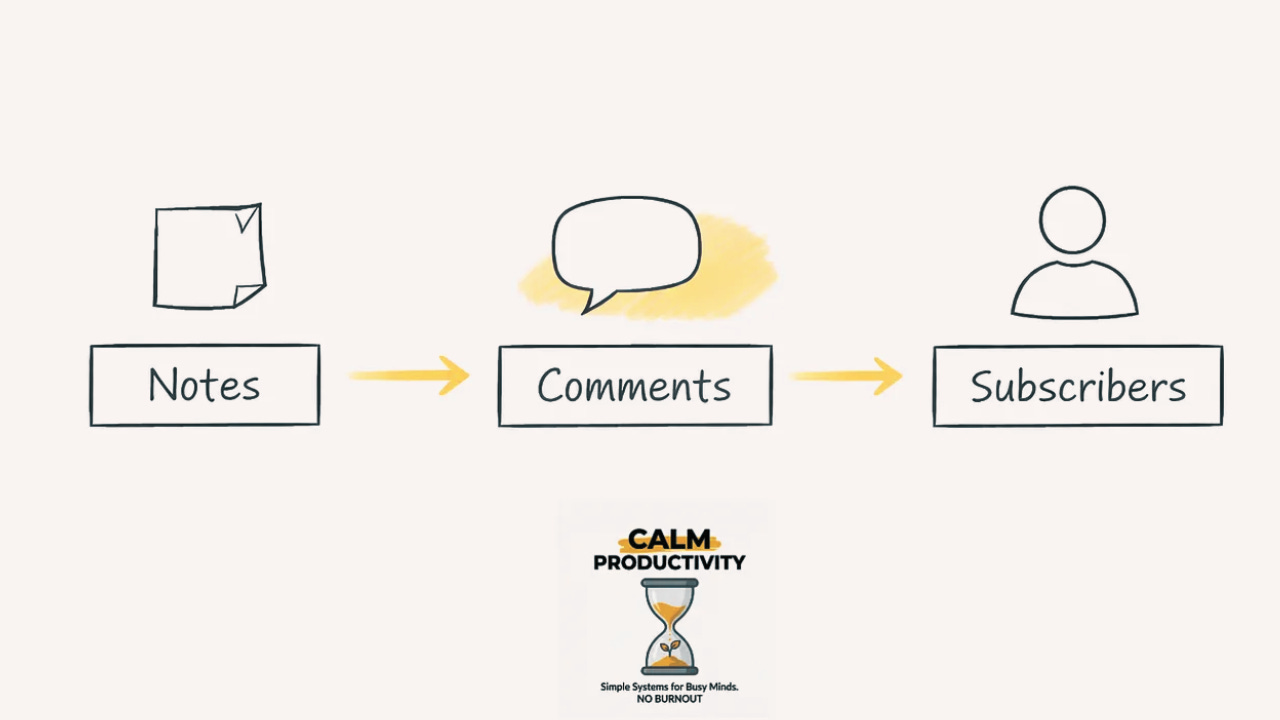
You post a Note.
You wait.
You get one lonely like. Maybe nothing.
Then you start thinking the obvious, “My ideas aren’t interesting.”
They are.
Your Note format is just making it easy to ignore.
I used to treat Substack like a vending machine. I’d spend days writing a newsletter. Hit publish. Share it once. Then refresh my stats like a lab rat.
Nothing happened. No comments. No conversations. No “hey, I loved this” messages. Just silence and a quiet little voice saying, “Maybe my writing isn’t good enough yet.”
It wasn’t my writing. It was my distribution. More specifically, I was skipping the one part of Substack designed for discovery and connection.
Notes.
I saw Notes. I ignored Notes. I told myself Notes were “too small” for someone trying to build a “real” publication.
That mindset cost me months. Things changed when I started using Notes regularly, and more importantly, when I started using them intentionally.
Not like a marketer.
Like a human.
What are Notes actually?
Notes are Substack’s social feed.
Short posts.
One idea.
A question.
A quick story.
A quote with a take.
Sometimes a screenshot.
And here’s the key thing most people miss:
Notes don’t just reach your subscribers. They can reach people who have never heard of you. That’s the entire point.
Notes earn attention from the wider Substack graph. If you want engagement on Substack, you do not “post and pray.” You show up where conversations already exist.
The shift that made Notes work for me
I stopped treating Notes like mini-newsletters.
And I stopped treating them like branding exercises.
Instead, I treated Notes like small shipping.
A Note is not a masterpiece. It’s a signal.
“Here’s what I’m thinking.”
“Here’s what I learned.”
“Here’s what I’m struggling with.”
“Here’s a useful rule.”
“Here’s a question worth answering.”
That’s how you get replies.
That’s how you build relationships.
That’s how people click your profile and decide whether to subscribe.
The 7 Notes moves that actually work
1) The 10-5-1 Rule (my baseline)
Every time you post a Note, do this:
Read 10 Notes from writers in your niche
Leave 5 real comments (not “great post”)
Send 1 thoughtful DM (one line is enough)
That’s it.
You do not need to spend hours. You need consistency.
Most growth on Substack comes from comments, not headlines.
2) Write Notes like texts, not press releases
My early Notes were “polished.”
They performed like polished drywall. Technically fine. Emotionally dead.
Notes work when they sound like a person. Short. Direct. Slightly imperfect.
Try this tone:
a quick confession
a specific observation
a small win
a tiny failure
a real question
If you read it out loud and it sounds like a LinkedIn post, rewrite it.
3) Your first line is the entire game
The first line decides whether someone stops scrolling.
Aim for one of these:
a sharp truth
a surprising contrast
a specific moment
a question with teeth
Examples:
“I wasn’t procrastinating. I was avoiding decisions.”
“My to-do list didn’t make me productive. It made me anxious.”
“Real productivity is boring. That’s why it works.”
4) One Note, one idea. No excuses.
If you try to pack 3 lessons into one Note, it comes across as a lecture.
The Notes that get saved and replied to usually do one job:
one tip
one story
one question
one clear opinion
Clarity is shareable. Complexity is scrollable.
5) Repeat your best ideas (because most people never saw them)
Most of your readers did not see your best work.
That’s not an insult. It’s just how feeds work.
So yes, repost older ideas. Change the angle. Tighten the example. Rewrite the hook.
That’s not lazy.
That’s distribution discipline.
6) Cycle through 6 Note types so you never run out
This solved my “what do I post today?” problem.
Rotate these:
Teach something practical
Reframe how someone sees a problem
Behind-the-scenes (process, struggle, win)
Promote something you made (sparingly)
Question that invites replies
Collaborate (invite people to share their own links or ideas)
When you rotate, you stay consistent without forcing inspiration.
7) Let comments write your next post
This is the most underrated move.
When a Note gets a bunch of comments, do not just say thanks.
Mine it.
Turn a good comment into your next Note
Answer a smart question with a full post
Pull a disagreement into a new angle
Stop guessing what people want.
Use what they’re already reacting to.
10 copy-paste Notes you can post today
Steal these. Adjust one detail so it sounds like you.
1) Question (high reply)
What’s your most reliable “get back on track” move when your day goes off the rails? One thing. Not five.

2) Tiny confession (human)
I keep rewriting the same paragraph because it sounds “smart” but not true. Today I’m choosing true.

3) Practical tip (save-worthy)
If you feel behind, don’t make a longer list. Pick 1 outcome, write 3 actions, schedule the first one. That’s the whole reset.

4) Reframe (shareable)
The problem isn’t lack of time. It’s too many open loops. Your brain pays interest on unfinished things.

5) Behind the scenes (connection)
Today’s newsletter almost died in Drafts because I tried to cover too much. I cut it down to one idea. Instantly better.

6) Opinion (discussion)
Hot take: productivity advice fails because it assumes you have unlimited emotional energy. You don’t. Systems should reduce decisions.

7) Prompt (community)
Drop your newsletter link and tell me the one sentence promise of your publication. I’ll read 3 and reply with a stronger hook.

8) Simple challenge (engagement)
Try this tomorrow: no new tasks after 3pm. Only execution. If you try it, tell me what broke.

9) “I used to” contrast (relatable)
I used to plan my day with a to-do list. Now I plan with time blocks for outcomes. Less guilt, more shipping.

10) Ask for feedback (instant interaction)
I’m testing two first lines for my next post. Which one would make you stop scrolling? A) ___ B) ___
Start with three (don’t try to do everything)
If you try all seven moves at once, you will quit.
Start with three for two weeks:
10-5-1 rhythm
One idea per Note
Stronger first line
That’s enough to change your results.
Then add:
the 6-type rotation
reposting winners
using comment signals as your writing roadmap
If you post Notes already, comment with:
Your best-performing Note type (question, tip, mini-story, reframe, promo)
One link to a Note that did well (or one that flopped)
I’ll reply with one concrete rewrite to make your next Note stronger.
And if this was useful, restack it so more writers stop “publish and wait” and start building an actual community.
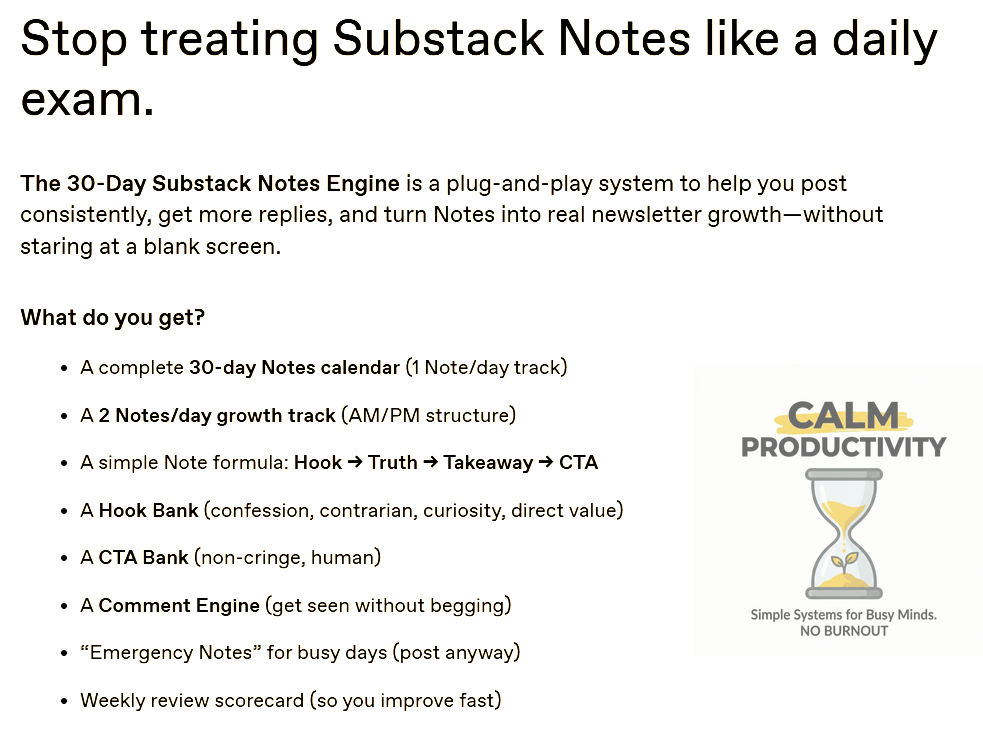
I have put together a “30-Day Notes Calendar” with prompts, rotation rules, and a simple tracking sheet so you can run Notes like a calm system, not a daily scramble.
Final Takeaways
Notes are Substack’s discovery engine, and newsletters are trust engines.
Treat Notes like small shipping, not mini-newsletters.
The first line decides everything.
One Note should carry one idea.
Rotate Note types to improve consistency.
Use comments as your content research, not your ego meter.
Notes aren’t content. They’re reps. The 10-5-1 rule is basically “show up like an operator,” not a creator. 💪🏽